Waqf (plural awqaf) is an Islamic endowment: a person permanently dedicates an asset — land, a building, a well, a sum of money — to Allah, so that the asset itself can never be sold, gifted or inherited, while its benefit or income is used for a charitable purpose for as long as it exists. The Prophet ﷺ advised Umar ibn al-Khattab to “retain the principal and give away its fruit,” and that sentence remains the definition of waqf fourteen centuries later. In Pakistan, waqf is the legal and spiritual engine behind thousands of mosques, madrasas, graveyards, shrines, hospitals and water schemes, managed partly by provincial Auqaf departments and partly by private trusts. This guide explains what waqf means, its basis in the Quran and Sunnah, its types, how it differs from Sadaqah Jariyah and Zakat, and how an ordinary family in Pakistan can create or contribute to one.
![An old stone mosque courtyard with a well, representing a historic waqf in South Asia]
—
Waqf literally means “to stop” or “to hold.” In Shariah it means holding an asset in Allah’s ownership so that it cannot be transferred, and dedicating its usufruct — the rent, the produce, the water, the shelter — to a lawful purpose, permanently.
Three features distinguish waqf from any other charity. The asset is perpetual: once declared a waqf, it stays waqf. The asset is inalienable: nobody, including the founder and his heirs, can sell or inherit it. And the benefit is continuous: the reward flows to the founder for as long as the asset serves its purpose, which is why waqf is the most durable form of Sadaqah Jariyah.
—
The Quran does not use the word waqf, but it commands the spending from which waqf grew: “You will never attain righteousness until you spend from what you love” (Surah Aal-e-Imran, 3:92). When that verse was revealed, Abu Talha dedicated his beloved orchard Bayruha, and the Prophet ﷺ directed him to keep it for his relatives — an early endowment.
The clearest precedent is Umar’s land at Khaybar. He asked the Prophet ﷺ what to do with the most valuable property he had ever owned, and was told: “If you wish, retain the principal and give its fruit in charity.” Umar stipulated that the land could not be sold, gifted or inherited, and that its produce would go to the poor, relatives, slaves, travellers and guests (Bukhari and Muslim). The hadith contains every element of waqf law: the perpetual asset, the named beneficiaries, and the manager’s right to eat from it reasonably.
Uthman ibn Affan bought the Well of Rumah in Madinah and made it a waqf for all Muslims, so that water sold at a price became free. The Prophet’s statement that a person’s deeds end at death “except three — a continuing charity, beneficial knowledge, or a righteous child who prays for him” (Muslim) is the reason Muslims have endowed wells, schools and mosques ever since.
—
Type | Arabic term | What it means | Pakistani example |
Charitable waqf | Waqf khayri | Benefit goes directly to a public purpose | A mosque, a free dispensary, a village handpump |
Family waqf | Waqf ahli / dhurri | Income goes to the founder’s descendants first, then to charity when the line ends | Agricultural land endowed for a family with the poor as final beneficiary |
Mixed waqf | Waqf mushtarak | Income split between family and charity | A commercial plaza whose rent funds both heirs and a school |
Cash waqf | Waqf al-nuqud | A sum of money held as capital; only its lawful return is spent | A trust’s endowment fund whose profit pays student stipends |
Property waqf | Waqf al-‘aqar | Land or buildings generating rent for a cause | Shops endowed to maintain a graveyard or madrasa |
Self-benefiting waqf | Waqf ‘ala al-nafs | Founder keeps the benefit during life, then charity | Permitted in Hanafi fiqh; disputed elsewhere |
Family waqf is restricted or abolished in several Muslim countries because it was misused to lock up estates, but it remains valid in classical fiqh and under Pakistani law when its ultimate beneficiary is a charitable purpose. Cash waqf, once controversial, is now accepted by most contemporary scholars provided the capital is invested in Shariah-compliant ways and only the return is spent.
—
The founder (waqif) must be an adult of sound mind who owns the asset outright. The asset must be lawful, identifiable and durable enough to give ongoing benefit — a house, a plot, a well, shares in a business, or cash under the cash-waqf rules. The purpose must be permissible and not cease to exist; “for the poor of Karachi” or “for a mosque” is valid, whereas a purpose that can end makes the waqf void unless a final beneficiary is named.
The declaration must be clear and, in the Hanafi school, is binding once the founder states it — though for safety most scholars advise a written deed, witnesses and, in Pakistan, registration. The founder may appoint himself as the first mutawalli (manager) and name successors.
—
Many donors in Pakistan use “waqf” and “Sadaqah Jariyah” interchangeably. They overlap but are not the same.
Feature | Waqf | Sadaqah Jariyah | Zakat |
Obligation | Voluntary | Voluntary | Obligatory at 2.5% |
Asset status | Held permanently in Allah’s ownership | Given away; may or may not be perpetual | Transferred to an eligible recipient |
Can the asset be sold? | Never | Depends on the recipient | Yes, by the recipient |
Who can benefit | Any lawful purpose, including the rich, mosques and family | Any lawful purpose | Only the eight Quranic categories |
Example | A plot endowed for a school | Building a well, printing Qurans | Cash to a widow below the nisab |
In short, every waqf is a Sadaqah Jariyah, but not every Sadaqah Jariyah is a waqf; and Zakat can never be made into a waqf, because Zakat must pass into the ownership of a poor recipient. Our guides to Sadaqah Jariyah meaning and examples and the difference between Zakat and Sadaqah cover the other two in detail.
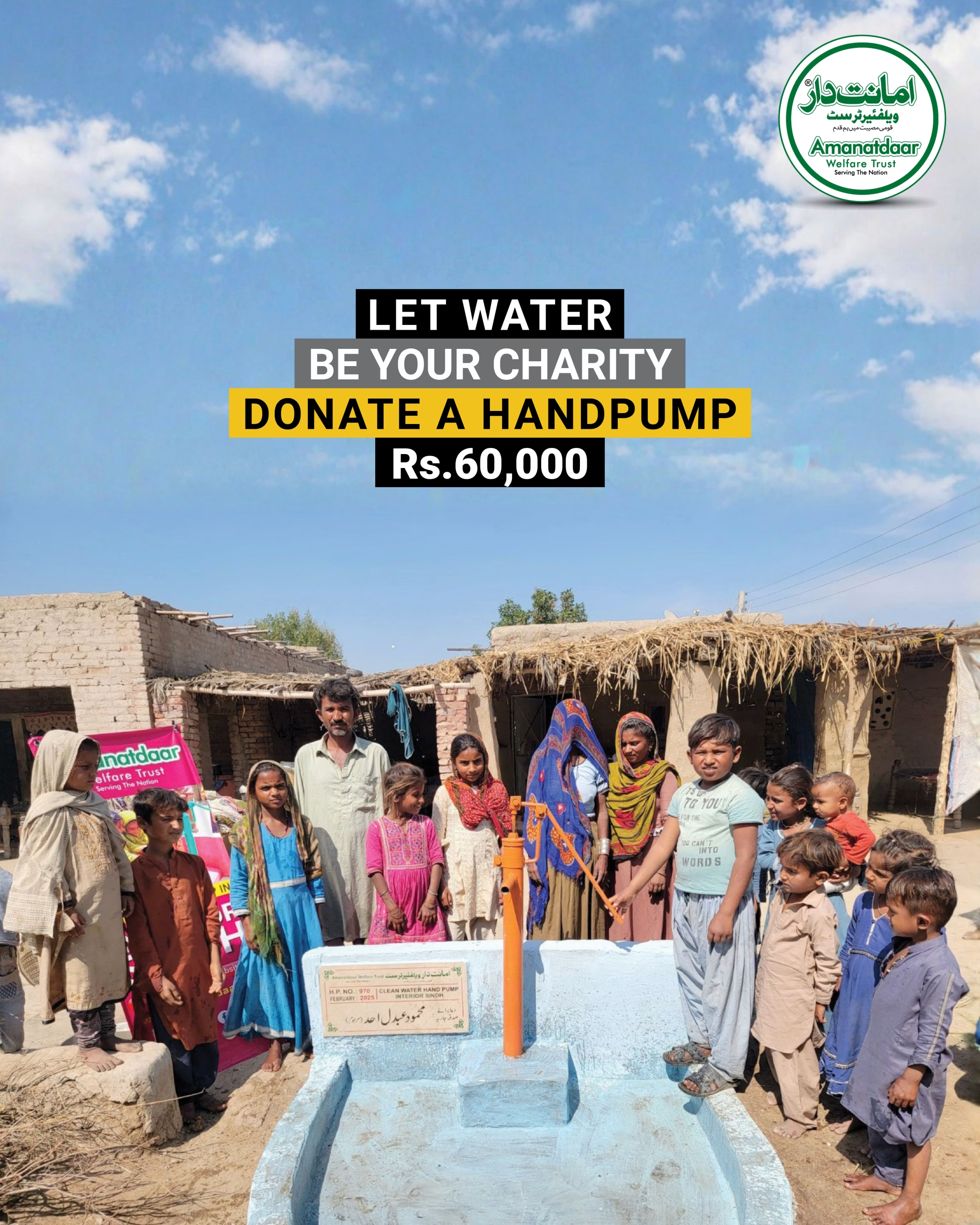
![A handpump installed by a welfare trust in a Sindh village with children filling containers]
—
Pakistan inherited a large stock of awqaf from the Mughal and colonial periods. After the Waqf Properties Ordinances of 1959 and 1979, the management of most public religious awqaf — major mosques, shrines and their attached lands — passed to provincial Auqaf departments, which now collect rent and nazrana and spend on maintenance, salaries and welfare. Private awqaf and new endowments are more commonly created as trusts under the Trust Act 1882 or as societies, with the trust deed written to give the asset waqf status in Shariah terms.
For a family in Karachi today, creating a waqf usually means one of four routes:
Whichever route is used, the deed should state that the asset is waqf, name a lawful and perpetual purpose with a final charitable beneficiary, appoint a mutawalli with succession, and be registered so that heirs cannot later contest it.
—
Pakistan’s welfare needs are recurring — a child needs fees every year, a village needs water every day — while most giving is one-off. Waqf converts one-off generosity into permanent income. A single shop endowed in Saddar can pay school fees for a decade; a water station built as waqf serves a neighbourhood for twenty years. For the donor, the reward does not stop at death, which is why waqf is also the natural vehicle for isal-e-sawab on behalf of parents — see our guide to Sadaqah on behalf of deceased parents.
Through its Sadaqah-e-Jariya programme, Amanatdaar Welfare Trust builds and maintains handpumps, water coolers and water stations across Sindh, and sponsors Hifz and school education that donors can fund in perpetuity. As a registered trust in Pakistan, it is audited every year and reports on each facility’s status so that a donor’s endowment is visibly maintained.
Perspective from Amanatdaar Welfare Trust: “Many of our donors install a handpump in a parent’s name and ask the same question a year later: is it still working? That question is the heart of waqf. An endowment is only perpetual if someone maintains it. We treat every pump, cooler and classroom as a trust held on behalf of the donor and the community, and we report on it as long as it stands.”
—
—
![A classroom of children at a trust-funded school in Karachi]
Waqf means holding an asset permanently in Allah’s ownership so it cannot be sold, gifted or inherited, while its income or benefit goes to a charitable or lawful purpose. It is the most lasting form of continuing charity.
Not by name, but the Quranic command to spend from what you love (3:92) and the Prophet’s instruction to Umar about his Khaybar land established it. Scholars agree on its validity by consensus.
Sadaqah Jariyah is any charity whose benefit continues. Waqf is the specific legal form in which the asset itself is locked in Allah’s ownership forever. All waqf is Sadaqah Jariyah; not all Sadaqah Jariyah is waqf.
No. Zakat must be transferred into the ownership of an eligible recipient. Waqf, by definition, is not owned by anyone. Waqf is funded from voluntary wealth.
Yes. Cash waqf is accepted by most contemporary scholars, provided the capital is preserved and invested in Shariah-compliant ways and only the return is spent on the purpose.
Major public religious awqaf are managed by provincial Auqaf departments. Private and newly created awqaf are usually managed by a mutawalli under a registered trust deed, often through a welfare trust.
Yes, within the one-third of your estate that Shariah allows for bequests. Beyond that share requires the heirs’ consent.
—
Waqf is the Islamic answer to a very modern problem: how to make generosity outlast the giver. A plot, a shop, a well or an endowment fund, held permanently and managed honestly, keeps serving — and keeps rewarding — long after the donor is gone. The conditions are few: own it, dedicate it to a lawful and lasting purpose, appoint someone to manage it, and write it down.
If you would like to endow something lasting in Pakistan — a water station, a classroom, or a child’s Hifz — explore Amanatdaar’s Sadaqah-e-Jariya programme, a registered, audited trust that builds, maintains and reports on every endowment it holds.
Subscribe to our Newsletter. We promise not to spam you!