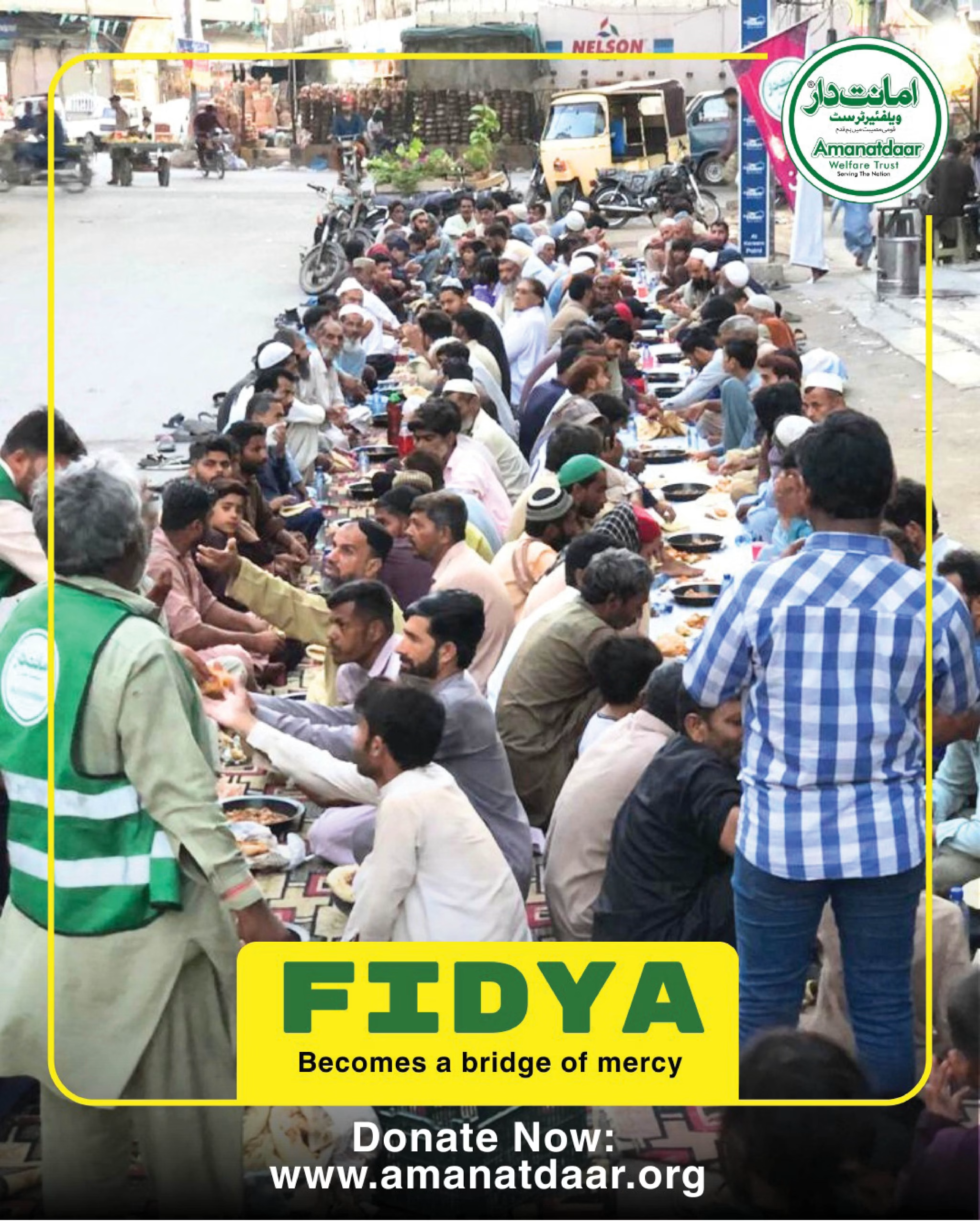
Fidya and Kaffarah are two different payments for two different situations. Fidya is compensation for a Ramadan fast you genuinely could not keep and cannot make up later — such as due to chronic illness or old age. Kaffarah is a much heavier atonement for deliberately breaking a fast without a valid reason. Fidya is calculated per missed fast (feeding one needy person); Kaffarah for a single broken fast is fasting 60 consecutive days or feeding 60 needy people.
These two are constantly confused, and every Ramadan millions of Muslims search for the difference. Here is the clear breakdown — and, like Zakat, both are ultimately about ensuring the poor are fed.
Fidya (فِدية) is a charitable payment made when someone cannot fast and has no realistic way to make up the missed days later. The classic cases are a person with a permanent or long-term illness, and the very elderly. The Quran ties it directly to feeding the poor: for each missed fast, you provide the equivalent of a needy person’s meals, traditionally measured against a staple food such as wheat.
Fidya is not for someone who is only temporarily unable to fast. A traveller, or a person with a short-term illness, should simply make up the fasts (qada) once they are able — they do not pay Fidya instead.
Kaffarah (كفّارة) is an atonement for deliberately breaking or missing a fast without a valid excuse — for example, intentionally eating or drinking during a fast one was obliged to keep. Because this is a serious breach, the compensation is far greater than Fidya.
For one deliberately broken fast, Kaffarah is:
The consecutive-fasting condition is strict — if the chain is broken without a valid reason, many scholars require restarting the 60 days.
| Fidya | Kaffarah |
Reason | Couldn’t fast and can’t make it up (illness, old age) | Broke or missed a fast deliberately, without excuse |
Nature | Compensation | Atonement (penalty) |
Amount | Feed 1 needy person per missed fast | Fast 60 consecutive days, or feed 60 people (per broken fast) |
Also make up the fast? | Not possible in these cases | The missed day is still made up (qada) alongside Kaffarah |
The amount is based on the cost of feeding one needy person for one day — measured against a local staple like wheat flour (roughly 2 to 2.5 kg per missed fast, or its cash value). Because it is pegged to food prices, the figure is set locally and updated every year.
In Pakistan, religious authorities announce a minimum rate each Ramadan. For 2026, for example, scholarly guidance set a minimum Fidya rate around Rs. 300 per day based on wheat flour, with higher amounts for barley, dates, or raisins, and those who can afford more encouraged to pay according to their means. Always use the current year’s announced rate rather than an old figure. If you missed all 30 fasts and cannot make them up, you pay Fidya for each — so 30 × the daily rate.
You can pay both in cash through a trusted charity that distributes food to eligible people on your behalf.
Fidya and Kaffarah exist for one reason: to feed people in need. Amanatdaar puts your payment to exactly that purpose. Your Fidya and Kaffarah can become real meals through Food Rations Distribution — where Rs. 13,200 feeds a family of five for a full month — or hot meals served daily through Amanatdaar Dastarkhuwan.
As a registered charity in Pakistan (Charity No. 217), certified by the Pakistan Centre for Philanthropy and a US 501(c)(3) nonprofit, Amanatdaar has already helped feed over 2.9 million people. If you are also giving your annual Zakat this Ramadan, you can fulfil it through our Zakat Program, and you may find our guide to the difference between Zakat and Sadaqah helpful for keeping each obligation clear.
What is the difference between Fidya and Kaffarah? Fidya compensates for fasts you couldn’t keep and can’t make up (illness, old age). Kaffarah atones for deliberately breaking a fast, and is much larger — 60 consecutive fasts or feeding 60 people per broken fast.
Do pregnant or breastfeeding women pay Fidya? Views differ by school of thought. In the Hanafi position — followed by most Muslims in Pakistan — their situation is usually treated as temporary, so they make up the fasts later rather than paying Fidya. Consult a scholar for your case.
Can I pay Fidya in money instead of food? Yes. You can give the cash equivalent to a charity that feeds eligible people on your behalf.
How much Fidya do I owe for a full missed Ramadan? The daily rate multiplied by the number of fasts missed — for all 30 fasts, that is 30 × the current daily Fidya rate.
Does paying Kaffarah remove the missed fast? No. Kaffarah is the atonement for the deliberate breach; the missed fast day is still made up separately.
Let your compensation do exactly what it is meant to — put food on the plate of someone who needs it. Give your Fidya or Kaffarah now through Amanatdaar’s Instant Donation Box, and feed a verified family in need across Pakistan.
Rulings on Fidya and Kaffarah — especially amounts and pregnancy — vary between schools of thought. Consult a qualified scholar for a ruling specific to you.
Subscribe to our Newsletter. We promise not to spam you!