Aqiqah is the Sunnah of sacrificing an animal to thank Allah for the birth of a child — traditionally two goats or sheep for a boy and one for a girl — performed ideally on the seventh day after birth, alongside naming the baby and shaving its head. The meat is shared with family, friends and the poor. It is not obligatory, but it is a strongly recommended practice that the Prophet ﷺ performed for his grandsons Hasan and Hussain. Today, many Pakistani families, and especially overseas Pakistanis, arrange Aqiqah through a trusted charity so that the meat reaches families who rarely eat meat at all.
The word aqiqah is linked to the hair a baby is born with, which is shaved on the seventh day. The practice predates Islam in Arabia, and the Prophet ﷺ retained it, purified it of pagan elements, and made it an act of gratitude to Allah.
The core hadith, narrated by Samurah ibn Jundub and recorded by Abu Dawud, at-Tirmidhi and an-Nasa’i, states that every child is held in pledge by its Aqiqah, which is sacrificed for him on the seventh day, when he is named and his head is shaved. In another hadith reported by Umm Kurz, the Prophet ﷺ said that for a boy two equivalent sheep are sacrificed and for a girl one.
The Prophet ﷺ performed Aqiqah for his grandsons Hasan and Hussain, and it is reported that Fatimah weighed their hair and gave its weight in silver as charity.
The majority of scholars — including the Shafi’i and Hanbali schools — consider Aqiqah a confirmed Sunnah (sunnah mu’akkadah) for the person responsible for the child’s maintenance, usually the father. Within the Hanafi school, which most Pakistanis follow, it is regarded as recommended (mustahabb) or permissible as an act of gratitude.
In practical terms, all schools agree: Aqiqah is rewarded, it is not a sin to omit it if you cannot afford it, and no family should go into debt to perform it.
Aspect | Boy | Girl |
Number of animals (Sunnah) | Two goats or sheep | One goat or sheep |
Minimum if unable to afford two | One goat or sheep is valid | One goat or sheep |
Share in a cow or camel | Two shares (Hanafi and Shafi’i views) | One share (Hanafi and Shafi’i views) |
Ideal day | 7th day after birth | 7th day after birth |
Head shaving and silver charity | Yes | Yes |
Naming | On or before the 7th day | On or before the 7th day |
The Prophet ﷺ himself is reported to have sacrificed one ram each for Hasan and Hussain in some narrations, which is why scholars confirm that one animal for a boy is valid when a family cannot afford two. The Hanbali school requires a whole goat or sheep and does not accept a share in a larger animal for Aqiqah.
The day of birth counts as day one. A baby born on a Friday has its Aqiqah on the following Thursday. If the seventh day is missed, many scholars recommend the fourteenth or twenty-first day, and after that, any time.
The animal conditions are the same as for Qurbani. A goat should generally be at least one year old; a sheep at least six months if it is well-grown, according to the Hanafi view. It must be healthy and free of major defects such as blindness, severe lameness, or missing most of an ear or horn.
The animal is slaughtered in the Islamic manner, saying “Bismillah, Allahu Akbar.” It is recommended to mention that this is the Aqiqah of the named child.
The child is named by the seventh day if not already named. Choosing a name with a good meaning is part of the Sunnah.
The baby’s hair is shaved, and its weight in silver — or the cash equivalent — is given as Sadaqah. In practice, newborn hair weighs very little, so many families give a generous rounded amount.
Tahnik — softening a date and rubbing a little on the baby’s palate — is a Sunnah usually done soon after birth, often by a righteous elder.
The meat may be given raw or cooked, shared among family, neighbours and the poor, and the family may also eat from it. There is no fixed ratio, though many follow the Qurbani custom of thirds.
The main cost is the animal. Livestock prices in Pakistan have risen sharply with inflation. Ahead of Eid ul Adha 2026, Daily Pakistan reported that a goat yielding roughly 25 kilograms of meat had sold for between Rs 50,000 and Rs 60,000 the previous year, with prices rising again. Slaughter and butchering charges add several thousand rupees more, and rates rise steeply around Eid.
Aqiqah Option | Approximate Cost (Outside Eid) | Notes |
One goat (for a girl, or minimum for a boy) | Rs 55,000 – 80,000 | Depends on size, breed and city |
Two goats (Sunnah for a boy) | Rs 110,000 – 160,000 | Prices in Karachi and Lahore differ |
Share in a cow, where the school permits | Lower per share | Not accepted in the Hanbali school |
Through a charity | Varies by programme | Includes slaughter and distribution |
These are indicative ranges for planning only. Prices vary widely by city, season and animal size, so always confirm the current rate before you book.
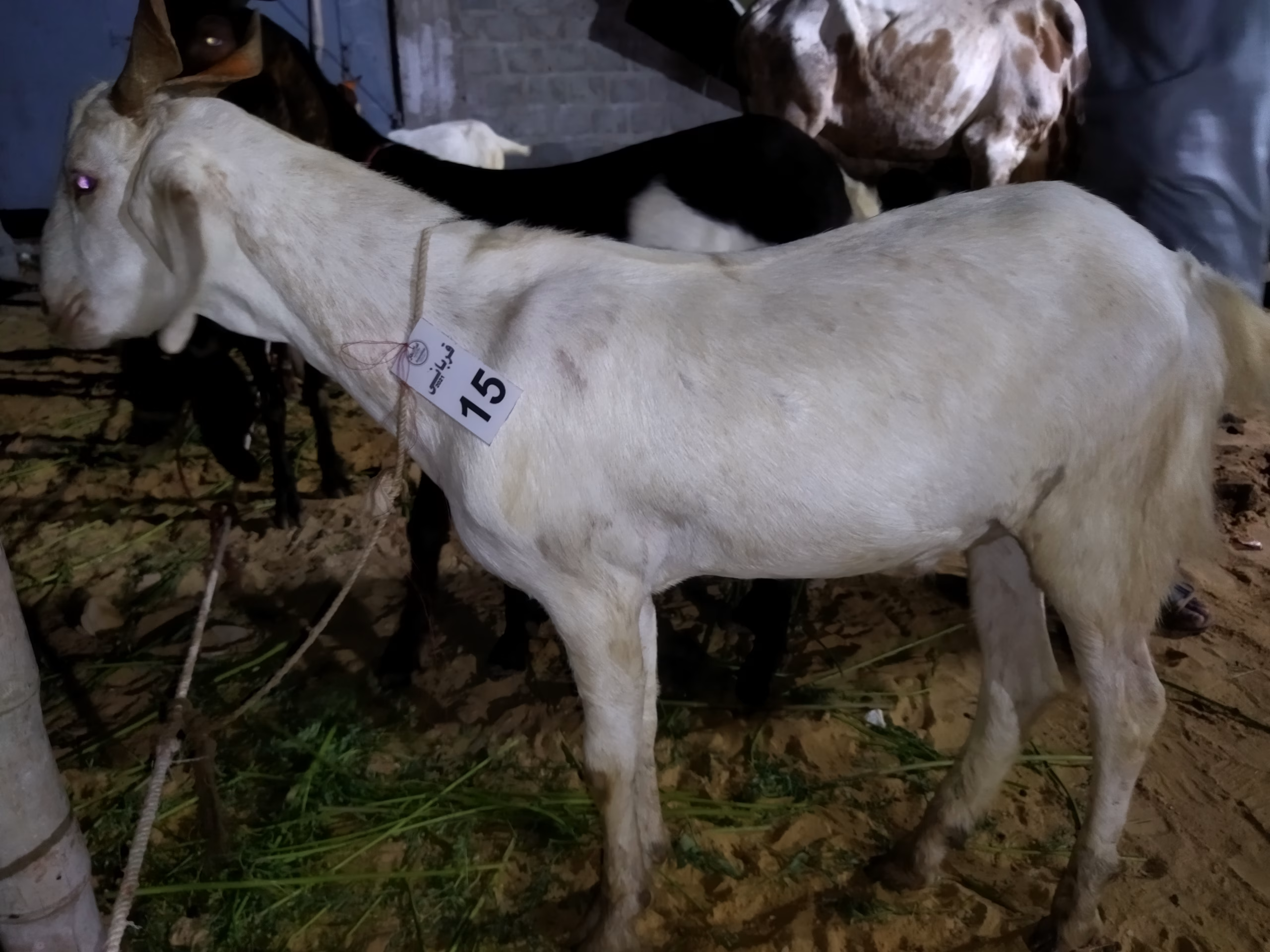
Yes. Appointing someone to perform the sacrifice on your behalf (wakalah) is valid, just as it is for Qurbani. This is how millions of overseas Pakistanis perform Aqiqah: the animal is sacrificed in Pakistan in the child’s name and the meat goes to families in need.
Doing Aqiqah through a charity offers three benefits. The meat reaches households that may not eat meat for months — often the same families who depend on food rations and community meals such as the Amanatdaar Dastarkhuwan. The cost is often lower than buying and slaughtering an animal yourself in a city. And the act combines gratitude for your child with a direct benefit to the poor.
Amanatdaar Welfare Trust’s Sadaqah and Animal Sacrifice programme channels animal sacrifices and Sadaqah to underprivileged communities in Pakistan. Contact the trust to confirm current rates and arrange an Aqiqah in your child’s name.
This is a misconception. Parents and family may eat from the Aqiqah meat, just as they may from Qurbani.
Some scholars recommended cutting the meat at the joints rather than breaking the bones, as a hopeful sign for the child’s health. It is a recommendation from some, not a condition of validity. The silver given for the baby’s hair, like other voluntary giving, is Sadaqah — see our guide to the difference between Zakat and Sadaqah.
The seventh day is ideal, but the opportunity is not lost afterward. Many scholars allow it at any time, and some permit adults who never had an Aqiqah to perform it for themselves.
Scholars differ. Some, including within the Hanafi school, permit taking an Aqiqah share in a Qurbani cow; others say each must be performed separately. If unsure, perform them separately.
Perspective from Amanatdaar Welfare Trust: “A family abroad celebrating a new baby and a family in Karachi who have not tasted meat in weeks are connected by a single Sunnah. When parents choose to perform their child’s Aqiqah through us, we make sure the sacrifice is done correctly, the child’s name is mentioned, and the meat goes to verified families who need it most. Gratitude for one child becomes nourishment for many.”
Aqiqah is the Sunnah of sacrificing an animal to thank Allah for the birth of a child. It is ideally done on the seventh day after birth, together with naming the child and shaving its head, and the meat is shared with family, friends and the poor.
The Sunnah is two goats or sheep for a boy and one for a girl. If a family cannot afford two for a boy, one animal is valid according to many scholars.
Yes. If the seventh day is missed, many scholars recommend the fourteenth or twenty-first day, and after that it can be done at any time. The reward is not lost by delay.
Yes. You can appoint a trusted person or charity in Pakistan to sacrifice the animal on your behalf in your child’s name. This is a valid form of agency (wakalah). Choose a registered charity in Pakistan so you can be confident the sacrifice is carried out correctly.
The main cost is the animal. In 2026, a medium goat typically costs around Rs 55,000 to 80,000 outside Eid season, so Aqiqah for a boy with two goats is roughly Rs 110,000 to 160,000. Prices vary by city and season.
Many scholars permit an adult whose Aqiqah was never performed to do it for themselves, while others say the responsibility lay with the parent. It is rewarded either way as an act of gratitude and charity.
Yes. The family may eat from it, give it as gifts, and share it with the poor. There is no prohibition on parents eating meat.
Aqiqah is one of the most joyful Sunnahs in Islam. It marks a new life with gratitude, a name, a small act of charity, and a shared meal. It asks families to thank Allah not with display, but by feeding others.
In a country where many families eat meat only on Eid, the Aqiqah of one child can bring real nourishment to dozens of people. That is a beautiful first deed to attach to a child’s name.
To arrange your child’s Aqiqah in Pakistan with the meat going to families in need, contact Amanatdaar through its Sadaqah and Animal Sacrifice programme.
Subscribe to our Newsletter. We promise not to spam you!