Paying Zakat is only valid when it reaches the right people. Unlike general charity, which can be given to anyone, Zakat has divinely defined recipients — and giving it outside these categories means the obligation remains unfulfilled. That is why “who is eligible for Zakat?” is one of the most important questions every Muslim must answer before giving.
The answer comes directly from the Quran. In Surah At-Tawbah (9:60), Allah specifies exactly eight categories of people entitled to receive Zakat. This article explains each category, clarifies who cannot receive Zakat, answers common family-related questions, and shows how verified distribution ensures your Zakat is accepted.
Allah says: “Zakat expenditures are only for the poor and for the needy and for those employed to collect [Zakat] and for bringing hearts together [for Islam] and for freeing captives [or slaves] and for those in debt and for the cause of Allah and for the [stranded] traveller — an obligation [imposed] by Allah. And Allah is Knowing and Wise.”
The word “only” (innama) in this verse is decisive: Zakat may not be spent outside these eight channels.
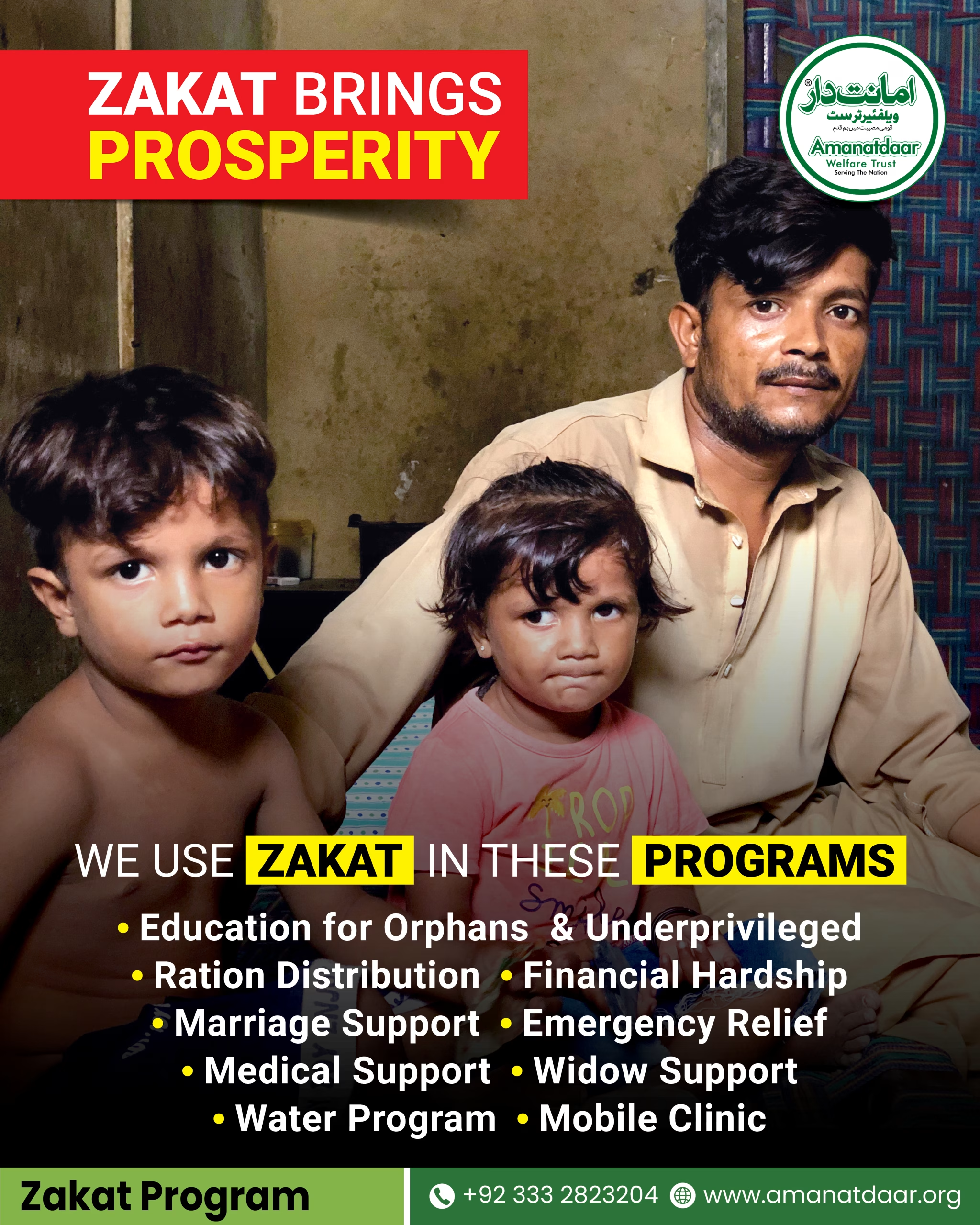
The poor are those who possess less than the nisab threshold — they may have some income or assets, but not enough to meet their essential needs. In Pakistan, this includes millions of daily-wage workers whose earnings cannot cover food, rent, and school fees. Amanatdaar’s Food Rations Distribution program serves precisely this category, delivering monthly ration bags that feed a family of five.
The needy are in even more severe hardship — those who have virtually nothing and often cannot ask for help out of dignity. Widows raising children alone frequently fall into this category, which is why our Widow Support program provides sustained monthly assistance to verified widow-led households.
Those employed to collect, safeguard, and distribute Zakat may be compensated from Zakat funds. This category allowed the Islamic state — and today allows credible institutions — to run organised, accountable Zakat systems.
This includes new Muslims establishing themselves in faith and those inclined towards Islam who may be supported to strengthen community bonds.
Historically applied to freeing slaves, contemporary scholars extend this category to freeing people from modern forms of bondage, including bonded labour and unjust captivity.
People overwhelmed by debt taken for legitimate needs — medical bills, family emergencies, or business failure through no fault of their own — are entitled to Zakat to clear those debts. Amanatdaar’s Financial Hardship Assistance program regularly rescues families crushed under emergency debts.
This category covers efforts in the path of Allah. Many scholars include supporting deserving students’ religious and essential education within this channel, alongside other works of communal benefit.
A traveller cut off from their resources — even if wealthy back home — may receive Zakat to reach safety and return home.
Just as important as knowing who can receive Zakat is knowing who cannot:
According to the majority of scholars, obligatory Zakat is designated for eligible Muslim recipients, while voluntary charity (Sadaqah) may be given to anyone in need regardless of faith. If you wish to support non-Muslim neighbours in hardship — a beautiful act in itself — do so through Sadaqah rather than Zakat.
Yes — and it can be more rewarding. While you cannot give Zakat to those you are obligated to support (parents, children, spouse), you can give it to eligible siblings, aunts, uncles, cousins, nephews, and nieces. The Prophet (peace be upon him) taught that charity to a relative earns double reward: one for charity and one for maintaining family ties.
The default and preferred practice is to distribute Zakat within the community where it was collected — the Prophet ﷺ instructed that it be “taken from their rich and given to their poor.” However, the majority of scholars permit transferring Zakat to another region when:
For Muslims living in North America, Europe, or the Gulf, sending Zakat to Pakistan satisfies all these considerations at once. Pakistan is home to some of the world’s most acute, verified need — chronic food scarcity affecting nearly 37% of residents, tens of millions of out-of-school children, and widows and patients with no social safety net. A hundred dollars of Zakat that would barely register in a Western economy feeds a Pakistani family for weeks.
Scholars encourage giving a recipient enough to genuinely relieve their situation — ideally enough to remove them from need entirely — rather than scattering token amounts that change nothing. This is why Amanatdaar’s Zakat disbursements are structured as complete solutions:
This approach honours both the letter of eligibility and the higher objective of Zakat: not managing poverty, but ending it, one household at a time.
Here lies the practical challenge: how do you know the person receiving your Zakat is genuinely eligible? Giving to someone who appears needy but actually holds wealth above nisab may leave your obligation unfulfilled.
This is where institutional verification protects both your worship and the community’s trust. At Amanatdaar Welfare Trust, every Zakat application goes through a structured assessment:
Our annual and audit reports are publicly available, and Amanatdaar is registered both in Pakistan (Charity No. 217) and in the USA as a 501(c)(3) nonprofit.
Through Amanatdaar’s Zakat Program, your Zakat reaches verified recipients across multiple channels:
Who are the 8 recipients of Zakat in the Quran? The poor (fuqara), the needy (masakeen), Zakat administrators, those whose hearts are to be reconciled, freeing captives, those in debt, in the cause of Allah, and the stranded traveller — as listed in Surah At-Tawbah 9:60.
Can a person with a job receive Zakat? Yes, if their total wealth and income still fall below the nisab and cannot meet their essential needs. Employment alone does not disqualify someone.
Can I give Zakat to my sister or brother? Yes, provided they are genuinely eligible (below nisab). Siblings are not among the relatives you are obligated to support, so Zakat to them is valid and doubly rewarded.
Can Zakat be given without telling the recipient it is Zakat? Yes. Scholars permit giving Zakat discreetly to protect the recipient’s dignity, as long as your own intention (niyyah) of Zakat is present.
Your Zakat is only as valid as its recipient. Don’t leave that to chance. Give through Amanatdaar’s verified Zakat Program today, or donate instantly via our Instant Donation Box — and fulfil your pillar of Islam with complete confidence.
Subscribe to our Newsletter. We promise not to spam you!