When someone we love falls ill, we feel helpless. Doctors, medicines and tests all have their place, but a believer knows that true healing (shifa) comes only from Allah. The Prophet ﷺ taught us specific duas for the sick, encouraged us to visit them, and showed us that charity can be a means of relief.
Below are six authentic duas for a sick person, with transliteration and meaning, followed by the Sunnah etiquette of visiting the sick and guidance on giving sadqa for health.
Aisha (RA) reported that when someone was ill, the Prophet ﷺ would wipe them with his right hand and say (Bukhari and Muslim):
Allahumma Rabban-nas, adhhibil-ba’s, ishfi Antash-Shafi, la shifa’a illa shifa’uk, shifa’an la yughadiru saqama.
Meaning: O Allah, Lord of mankind, remove the harm and heal, for You are the Healer. There is no healing except Your healing, a healing that leaves no illness behind.
The Prophet ﷺ said that whoever visits a sick person whose time of death has not come and says the following seven times, Allah will heal him (Abu Dawud and al-Tirmidhi):
As’alullahal-‘Azim, Rabbal-‘Arshil-‘Azim, an yashfiyak.
Meaning: I ask Allah the Mighty, Lord of the Mighty Throne, to heal you.
Uthman ibn Abi al-As (RA) complained of pain. The Prophet ﷺ told him to place his hand on the painful area, say “Bismillah” three times, then say the following seven times (Sahih Muslim):
A’udhu billahi wa qudratihi min sharri ma ajidu wa uhadhir.
Meaning: I seek refuge in Allah and His power from the evil of what I feel and what I fear.
When the Prophet ﷺ visited a sick person, he would say (Bukhari):
La ba’sa, tahurun in sha Allah.
Meaning: No harm, it is a purification, if Allah wills. This reminds the patient that illness expiates sins.
The Prophet ﷺ would recite Surah al-Ikhlas, Surah al-Falaq and Surah an-Nas, blow into his hands and wipe over his body, especially when he was unwell (Bukhari). Surah al-Fatihah is also a proven ruqyah; a companion recited it over a tribal chief who had been stung by a scorpion, and he recovered, and the Prophet ﷺ approved (Bukhari).
Prophet Ayyub (AS) endured years of illness with patience. His dua, recorded in the Quran (21:83), is beloved to many patients:
Anni massaniyad-durru wa Anta arhamur-rahimin.
Meaning: Indeed, adversity has touched me, and You are the Most Merciful of the merciful. Allah responded, removed his affliction and restored his family.
Visiting the sick is one of the rights a Muslim has over another. The Prophet ﷺ said that whoever visits a sick person remains in the harvest of Paradise until he returns (Sahih Muslim). He also said that seventy thousand angels pray for the one who visits a sick person in the morning until evening (al-Tirmidhi).
A narration widely quoted in Pakistan says, “Treat your sick with charity.” It is reported by al-Bayhaqi, al-Tabarani and others. Hadith scholars differ on its strength: some grade it weak, while others consider it acceptable because of supporting narrations. What is certain from authentic sources is that sadaqah extinguishes sins (al-Tirmidhi), protects from calamity, and is among the most beloved deeds to Allah. Many scholars therefore encourage giving charity with the intention of seeking healing.
You can read more about the spiritual benefits of giving in our article on the power of Sadaqah.
In Pakistan, many families slaughter a goat, often a black one, as “sadqa ka bakra” for a sick person. Slaughtering an animal and giving the meat to the poor is a valid form of charity. However, there is no requirement in the Quran or Sunnah for a specific animal, a specific colour or a slaughter at all. Feeding the hungry, paying for someone else’s treatment or giving cash to the needy are equally valid, and often more useful to the recipient.
The Prophet ﷺ said that no fatigue, illness, worry, grief, harm or distress befalls a Muslim, not even the prick of a thorn, except that Allah expiates some of his sins because of it (Bukhari). Illness is a test, but it is also a means of purification and closeness to Allah. Seek treatment, make dua, give charity, and trust in His wisdom.
For more on how charities are improving healthcare access, see how charities improve healthcare in Pakistan.
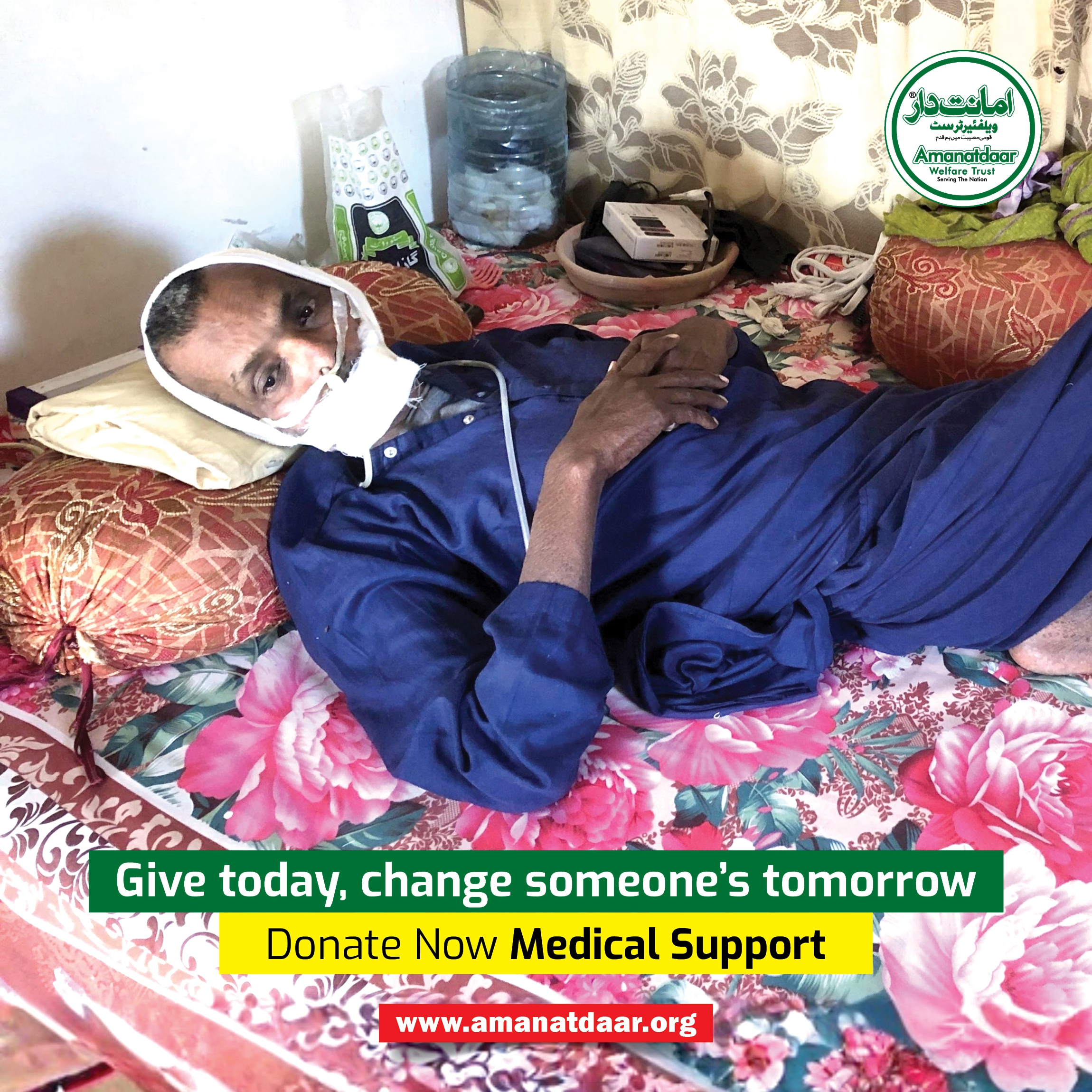
Give Sadqa for Someone You Love Make your dua for shifa with a gift that heals someone else. Support a patient through Amanatdaar Medical Support or give any amount through our Instant Donation Box. |
The most well-known is “Allahumma Rabban-nas, adhhibil-ba’s, ishfi Antash-Shafi, la shifa’a illa shifa’uk, shifa’an la yughadiru saqama,” taught by the Prophet ﷺ (Bukhari and Muslim).
“As’alullahal-‘Azim, Rabbal-‘Arshil-‘Azim, an yashfiyak” (I ask Allah the Mighty, Lord of the Mighty Throne, to heal you), reported by Abu Dawud and al-Tirmidhi.
Yes. Dua can be made in any language. The Sunnah duas in Arabic carry special blessing, but sincere dua in your own words is also accepted.
Giving charity is always encouraged, and many scholars recommend it with the intention of healing. The specific hadith “treat your sick with charity” is debated in strength, but the general virtue of sadaqah is well established.
No. There is no requirement for a specific animal or colour. Any charity given sincerely, such as feeding the poor or paying for medical treatment, is valid.


Subscribe to our Newsletter. We promise not to spam you!