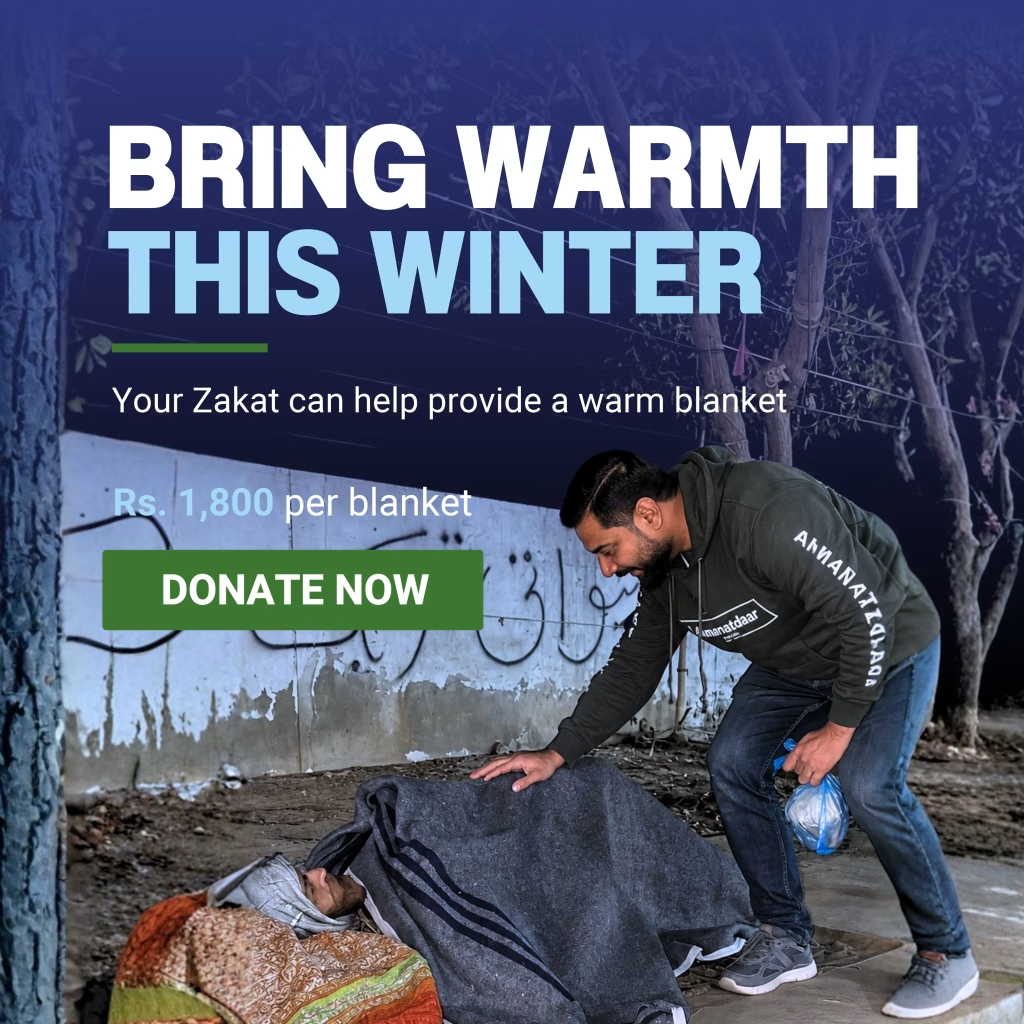
Donate your Zakat to Amanatdaar to ensure it reaches the most needy.

Child Labour in Pakistan: 2026 Facts, Causes & Laws

Child Labour in Pakistan: Facts, Causes, Laws and How to End It

Walk through any busy market in Karachi and you will see them: boys washing dishes at roadside dhabas, girls carrying younger siblings while selling flowers at traffic signals, children bent over carpets or bricks. Child labour in Pakistan is everywhere, yet for almost three decades the country had no national data to measure it.

That changed in 2026. This article explains the latest child labour statistics in Pakistan, why children end up working, what the law says, and what families, charities and citizens can do to give these children their childhood back.

What Is Child Labour?

Not every task a child does is child labour. Helping at home or in a family shop for a short time, without harming school or health, is generally acceptable. The International Labour Organization (ILO) defines child labour as work that:

  • is mentally, physically, socially or morally dangerous and harmful to children, and/or
  • interferes with their schooling by depriving them of the chance to attend school, forcing them to leave early, or making them combine school with long and heavy work.

Hazardous work is the worst form: work in kilns, mines, tanneries, workshops, with chemicals or heavy machinery, or long hours that put a child’s health and safety at risk.

Child Labour in Pakistan: Latest Statistics (2026)

In June 2026, the National Commission for Human Rights (NCHR) and UNICEF released Pakistan’s first nationally representative child labour data in nearly 30 years, combining provincial child labour surveys. The previous national survey was conducted in 1996.

Indicator

Figure

Children aged 5-17 in child labour

About 8.6 million

Children in hazardous work

More than 6.6 million

Punjab

Around 6 million

Sindh

About 1.6 million

Khyber Pakhtunkhwa

745,155

Balochistan

201,352

Islamabad Capital Territory

15,180


The Sindh Child Labour Survey found that 10.3 percent of children aged 5 to 17 in the province are in child labour, with boys (13.7%) far more affected than girls (6.6%). Most working children in Sindh are in agriculture. The survey also found a direct link to poverty: 33.7 percent of the poorest households had at least one child in child labour.

Where Do Children Work in Pakistan?

  • Agriculture: cotton picking, harvesting and livestock care, often alongside parents.
  • Brick kilns: entire families, including young children, work to repay debts to kiln owners.
  • Domestic work: children, especially girls, work as maids in homes, often hidden from view and at risk of abuse.
  • Workshops and auto repair: boys work as “chhotas” in mechanic shops, exposed to chemicals and injuries.
  • Hotels, dhabas and tea stalls: long hours washing dishes and serving customers.
  • Carpet weaving, tanneries and surgical goods: hazardous industries with toxic exposure.
  • Street work: selling goods, begging and scavenging in waste dumps.

Causes of Child Labour in Pakistan

Poverty

Poverty is the single biggest driver. With the national poverty rate at about 29 percent, a child’s small daily wage can mean the difference between eating and going hungry.

Loss of a Parent

When a father dies or becomes disabled, the eldest son is often pulled out of school to earn. Supporting widows and orphans directly prevents this.

Debt Bondage

In brick kilns and agriculture, families take advances from employers and are trapped repaying them for years, with children working off the debt.

Lack of Schools and Cost of Education

Even where government schools are free, uniforms, books and transport cost money. Where no school is nearby, work seems like the only option.

Social Acceptance

In many communities, children working is seen as normal or even as training for adult life. Employers prefer children because they are cheap and less likely to complain.

Effects of Child Labour

  • Lost education: working children rarely complete school, locking them into low-paid work as adults.
  • Physical harm: injuries, burns, respiratory disease and stunted growth from heavy or toxic work.
  • Mental health damage: the Sindh survey found that 20.1 percent of children in child labour report symptoms of depression, almost double the rate of other children.
  • Abuse and exploitation: domestic child workers face a high risk of violence and sexual abuse.
  • Intergenerational poverty: uneducated child workers often raise children who also end up working.

Child Labour Laws in Pakistan

Pakistan has a strong legal framework on paper, though enforcement remains weak:

  • Article 11 of the Constitution prohibits forced labour and bars children under 14 from working in factories, mines or other hazardous employment.
  • Article 25-A makes free and compulsory education a right for all children aged 5 to 16.
  • Provincial laws such as the Sindh Prohibition of Employment of Children Act 2017, the Punjab Restriction on Employment of Children Act 2016 and the Khyber Pakhtunkhwa Prohibition of Employment of Children Act 2015 set minimum ages and list hazardous occupations.
  • The Bonded Labour System (Abolition) Act 1992 outlaws debt bondage.
  • Domestic work: Islamabad added child domestic labour to its list of banned occupations in 2020, and the Punjab Domestic Workers Act 2019 bars children under 15 from domestic work.

Pakistan has also ratified ILO Conventions 138 (minimum age) and 182 (worst forms of child labour).

How Can We End Child Labour in Pakistan?

Laws alone cannot pull a child out of work if the family still cannot eat. Lasting solutions address the reasons children work in the first place:

  1. Sponsor a child’s education so that school becomes affordable. Amanatdaar’s Education Guardianship covers fees, books and uniforms for underprivileged children.
  2. Replace the child’s income. Monthly ration support removes the pressure to send children to work.
  3. Help parents earn. Small business support gives mothers and fathers the tools to earn, so children can study.
  4. Protect widows and orphans, whose children are most at risk of being pushed into work.
  5. Refuse to employ children at home, in your business or through contractors, and report exploitation to the relevant labour department.
  6. Volunteer your skills in tutoring, awareness or fundraising through Amanatdaar’s volunteer network.

Put a Child Back in the Classroom

For many families, one year of school support is the difference between a classroom and a workshop. Sponsor an underprivileged child or give through our Instant Donation Box today.


Frequently Asked Questions

How many child labourers are there in Pakistan?

According to the June 2026 NCHR and UNICEF report, around 8.6 million children aged 5 to 17 are in child labour, and more than 6.6 million of them do hazardous work.

What is the minimum working age in Pakistan?

It varies by province and type of work. Generally, children under 14 cannot be employed, and children under 18 cannot do hazardous work under provincial laws.

What is the main cause of child labour in Pakistan?

Poverty is the main cause, followed by the loss of a parent, debt bondage, lack of affordable schools and social acceptance of children working.

Which province has the most child labour in Pakistan?

Punjab has the highest number, with around 6 million children in child labour, partly because it is the most populous province.

How can I report child labour in Pakistan?

You can contact your provincial labour department, the child protection authority in your province, or the police helpline 15. Helping the family with support can also remove the need for the child to work.

Sources

  • National Commission for Human Rights and UNICEF, Pakistan: Child Labour Surveys, Evidence for Action (June 2026), as reported by Dawn and The Express Tribune.
  • Sindh Labour Department, UNICEF and Bureau of Statistics Sindh, Sindh Child Labour Survey.
  • Constitution of Pakistan, Articles 11 and 25-A; ILO definition of child labour.
[searchwp_form id="2"]

Subscribe Newsletter

Subscribe to our Newsletter. We promise not to spam you!