A dastarkhwan (دسترخوان) is a Persian-origin word meaning “tablecloth” — specifically, the cloth spread on the ground or floor where a meal is shared communally. In Pakistan and across South and Central Asia, it has grown to mean far more than a piece of fabric: it describes the entire tradition of gathering, hosting, and feeding others with dignity. In modern welfare work, a dastarkhwan is an organised community kitchen and meal-service centre that provides hot, cooked food to people who cannot afford their next meal — a tradition of hospitality that has become one of Pakistan’s most important frontline tools against hunger.
Dastarkhwan is the term used across Central Asia and South Asia to refer to the traditional dining space where food is eaten. The word is of Persian origin, meaning the tablecloth spread on the ground, floor, or table as a clean surface for food. In everyday Urdu, dastarkhwan refers both to the physical cloth and to the full meal setting laid upon it — the dishes, the guests, the generosity.
This practice originated in Iranian palaces and was introducedto the Indian subcontinent by Turkish and Mughal rulers, gaining prominence in the 18th and 19th centuries among the Nawabs of Lucknow as a symbol of hospitality and social status. In daily use, the dastarkhwan is unrolled to accommodate family or guests, with bread often placed first as a gesture of respect and abundance, followed by shared dishes such as rice pilafs, kebabs, lentils, salads, and desserts, emphasising collective eating from common platters.
The word is used in many languages across the South-Central Asian region, including Balochi, Bengali, Urdu, Sindhi, Hindi, Kyrgyz, Kazakh, Uzbek, Turkmen, Dari, Pashto, and Nepali. Its universality is the point: no culture in this region eats alone if it can help it. The dastarkhwan is the physical expression of that ethic.
In English, the closest translation is “communal dining spread” — but that strips it of its soul. The dastarkhwan is less a piece of cloth than a statement: everyone at this cloth eats equally, and no one leaves hungry.
The dastarkhwan welfare model does not exist in a vacuum. It exists because Pakistan’s hunger crisis is real, persistent, and worsening in the country’s most vulnerable districts.
Between November 2024 and March 2025, approximately 11 million people in Pakistan’s rural population — 22 percent of the analysed population — were experiencing high levels of acute food insecurity, classified in IPC Phase 3 or above. This includes 1.7 million people in IPC Phase 4 (Emergency) and approximately 9.3 million people in IPC Phase 3 (Crisis). These figures come from the Integrated Food Security Phase Classification (IPC), the globally recognised standard for measuring acute hunger.
The IPC analysis covered 68 flood-affected, vulnerable rural districts across Balochistan, Sindh, and Khyber Pakhtunkhwa, encompassing approximately 50.8 million people — around 20 percent of Pakistan’s total population.
In the 2025 Global Hunger Index, Pakistan ranks 106th out of 123 countries with sufficient data, with a score of 26.0 — a level classified as “serious.” The IPC has also found that 2.14 million children in parts of Pakistan are suffering acute malnutrition.
The picture in Pakistan’s cities is different but no less urgent. Urban food insecurity is driven not by drought or floods but by inflation, unemployment, and the collapse of daily-wage incomes. A labourer who earns Rs. 800 on a good day and nothing on a bad one cannot reliably feed his family. This is precisely who walks through the door of a dastarkhwan.
IPC Classification | Population Affected (Nov 2024 – Mar 2025) | What It Means |
Phase 3 – Crisis | ~9.3 million | Cannot meet minimum food needs |
Phase 4 – Emergency | ~1.7 million | Large food gaps; acute malnutrition |
Phase 2 – Stressed | Remaining analysed districts | Inadequate food consumption |
The leap from private hospitality to public hunger relief was not a sudden invention. It was a cultural logic played out at scale.
For centuries, Pakistani households kept the dastarkhwan open for unexpected guests — neighbours, travellers, the poor who knocked at the door. Islamic teaching made this instinctive: feeding a hungryperson is an act of ibadah. The Prophet Muhammad ﷺ described the believer whose neighbour sleeps hungry as one who has failed a fundamental duty. Feeding others was never charity in the transactional Western sense — it was simply what a Muslim household did.
As Pakistan’s cities expanded rapidly from the 1970s onwards, the informal household dastarkhwan could no longer absorb the scale of urban poverty. Daily-wage workers arriving from rural Sindh, Balochistan, and KPK had no extended family network in Karachi or Lahore. The traditional safety net had geography baked into it — and migration broke that geography.
Welfare organisations stepped into the gap. Saylani Welfare International Trust, a non-government organisation focusing primarily on feeding the poor and homeless, was established in May 1999 and is headquartered in Karachi. It took the dastarkhwan — the cloth on the floor, the shared meal, the open door — and industrialised it into permanent, staffed, hygienic feeding centres. Saylani provides food twice a day to more than 63,000 poor people through its centres, most of them serving in Karachi.
Bahria Town’s Dastarkhwan began as a small initiative in 2008 and today operates as the largest network of soup kitchens in Pakistan, feeding hundreds of thousands of people every day across many cities.
The model spread because it worked. A centralised kitchen can cook at a cost per meal that no individual household — and no street restaurant — can match. Donated Zakat and Sadaqah funds, pooled across thousands of donors, create the purchasing scale that brings that cost down to a few rupees per plate. The dastarkhwan became the most efficient vehicle Islam’s giving economy had ever produced for fighting urban hunger.
A well-run dastarkhwan is not a soup kitchen in the Western sense — a cheerless hall with plastic trays. Done properly, it is a structured, dignified operation with defined hygiene standards, fixed mealtimes, and a deliberate ethos of respect.
Food is prepared in a dedicated kitchen, separate from the serving area. Bulk procurement of staples — rice, lentils, flour, cooking oil, vegetables — happens weekly or bi-weekly to keep costs stable. Cooking begins several hours before service. Meals are prepared fresh in hygienic kitchens and served with dignity to all who come.
Service runs in two shifts: a lunch window and an evening window. Beneficiaries do not need to register, prove eligibility, or show any documentation. They walk in, sit down, and are served. Every person who attends is treated as a guest, so as not to hurt his integrity, and served with quality and hygienic food. Some programmes also allow beneficiaries to take packed meals home for family members who cannot travel. Those who come for meals at free dastarkhwans can take packed food for their family members.
This is the feature that separates a dastarkhwan from conventional food aid. There is no means-testing queue, no stamp of poverty, no public shame. Meals are prepared and served in a clean, respectful environment, maintaining dignity for every individual. The Islamic principle at work here is hifz al-karama — the preservation of human dignity — which Islamic scholars consistently cite as an obligation of the giver, not merely a preference.
The dastarkhwan model serves a wide range of beneficiaries, united by one condition: they cannot reliably afford a cooked meal today.
Through the dastarkhwan model, centralised community kitchens deliver free, hygienic meals to daily wage labourers, students, and homeless individuals, emphasising nutritional support without religious or eligibility barriers.
Abstract models are useful. Concrete numbers are better. Here is exactly how one programme operates.
Amanatdaar Welfare Trust is a registered charity Pakistan based in Karachi that channels Zakat, Sadaqah, and general donations into food, education, healthcare, clean water, widow support, and emergency relief. Its Amanatdaar Dastarkhwan programme runs a structured cooked-meals operation with the following verified metrics:
Metric | Figure |
Meals served per day | 1,000 |
Operating days per week | 6 |
Token cost to beneficiary | Rs. 10 (symbolic — not a barrier) |
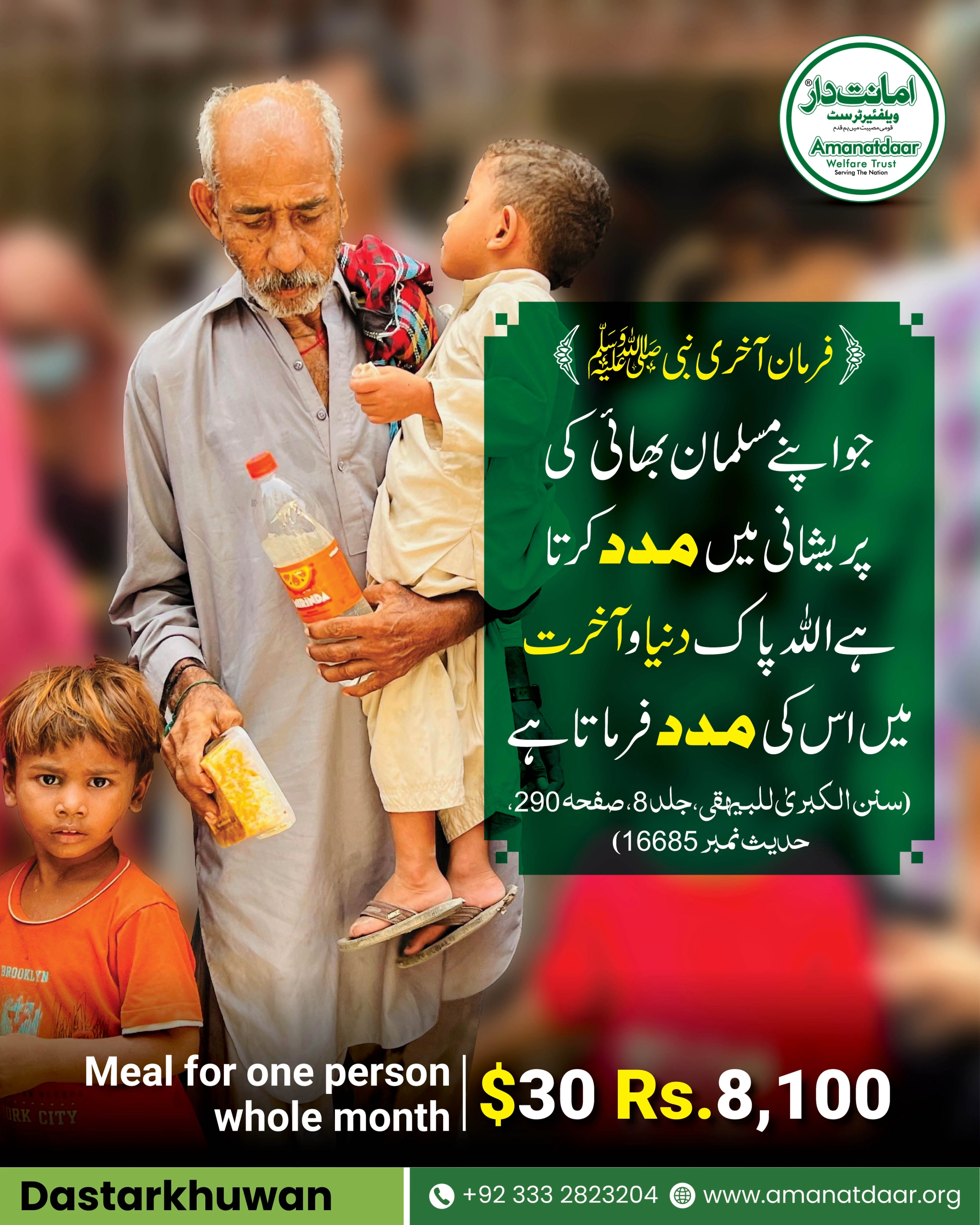
Cost per person per month (donor side) | $30 USD / approx. Rs. 8,400 |
Base city | Karachi, Pakistan |
The Rs. 10 token is not a revenue mechanism — it is a dignity mechanism. Paying even a nominal sum means the beneficiary is a customer, not a recipient of charity, and that psychological distinction matters enormously in Pakistani culture where accepting khairat (handout) carries social stigma.
At 1,000 meals a day, six days a week, the programme delivers roughly 24,000 cooked meals per month. A donor giving $30 — less than a single restaurant meal in most US cities — funds one person’s hot meals for an entire month.
Amanatdaar’s welfare programmes extend well beyond the dastarkhwan. The trust also runs food ration donation Pakistan in the form of monthly ration bags for families who cook at home, alongside healthcare, widow support, clean water handpumps, and a school system. The dastarkhwan sits within a wider ecosystem of care — it feeds people today while sister programmes address the structural causes of their poverty.
Amanatdaar Welfare Trust frames its dastarkhwan not as charity but as amanat — a trust held on behalf of Allah. In the trust’s own approach, every rupee donated is treated as a sacred deposit, not an institutional resource. This means zero administrative waste on the food programme, transparent per-meal costing, and a commitment that Zakat funds reach only those who are Islamically eligible to receive them: the fuqara (the poor) and the masakin (the destitute). The organisation is a registered NGO Pakistan with published certificates, a named team, and a Karachi office address — the basic transparency markers that overseas donors should always verify before giving.
Understanding why the dastarkhwan model thrives in Pakistan requires understanding the giving economy that funds it.
Zakat is a mandatory charity required of all adult Muslims who meet the Nisab threshold. It is the Third Pillar of Islam, distinguishing it from voluntary acts of generosity like Sadaqah.Zakat encompasses the act of purifying one’s wealth by giving a portion of it to those in need, as prescribed by Islamic law. The standard rate is 2.5% of net qualifying wealth held above the Nisab threshold for a full lunar year. Feeding the poor is one of the most direct and unambiguous uses of Zakat — the Quranic verse (9:60) explicitly names fuqara and masakin as the first two eligible categories. A dastarkhwan that serves people in genuine need is therefore a valid and verified channel for Zakat funds, provided the operating organisation can confirm that beneficiaries meet the eligibility criteria. Amanatdaar does this through community-level verification in the neighbourhoods it serves. You can pay Zakat in Pakistan directly through Amanatdaar’s dedicated Zakat programme.
Zakat is an obligatory charity with specific eligibility criteria, while Sadaqah is voluntary and can be given in any form. In Islam, Sadaqah includes acts of kindness, compassion, and generosity beyond financial aid. For the dastarkhwan model, Sadaqah is the more flexible funding stream — it can be given in any amount, at any time, to any person in need, without the strict nisab and eligibility rules that govern Zakat. A diaspora Pakistani in Houston who sends $10 on a Thursday night because the thought crossed his mind — that is Sadaqah, and it is enough to fund several hot meals by morning.
This is the giving category with perhaps the deepest emotional resonance for Pakistani and overseas Pakistani donors. Sadaqah Jariyah — ongoing charity — is an act whose reward continues after the giver’s death, for as long as the benefit continues to flow. Funding a permanent dastarkhwan kitchen, sponsoring a water connection to a community centre, or endowing a month of meals in the name of a deceased parent: all of these qualify as Sadaqah Jariyah. Amanatdaar has a dedicated Sadaqah Jariyah Pakistan programme specifically structured for donors who want their giving to outlast them — a particularly powerful option for the Pakistani diaspora in the USA who wish to honour parents or grandparents back home.
Giving Type | Obligation | Eligible Recipients | Best Dastarkhwan Use |
Zakat | Obligatory (2.5% of wealth) | Quranic 8 categories incl. poor & destitute | Funding meals for verified poor beneficiaries |
Sadaqah | Voluntary, any amount | Any person in need | Day-to-day operational top-up, emergency relief |
Sadaqah Jariyah | Voluntary, ongoing intent | Any lasting benefit to others | Kitchen infrastructure, endowed meal sponsorship |
Amanatdaar operates within a broader ecosystem of dastarkhwan welfare. Understanding the landscape helps donors choose where their giving fits best.
Saylani Dastarkhwan operates large-scale free meal centres providing lunch and dinner to thousands of people daily. The dastarkhwans are strategically located across major cities to serve labourers, travellers, and the underprivileged. The organisation sustains over 630 branches worldwide, supplemented by more than 630 dastarkhwan communal feeding facilities dedicated to daily meal distribution. Saylani’s scale is unmatched in Pakistan — it is the largest single dastarkhwan operator in the country. Its centres are open to all, with no registration required, and accept Zakat, Sadaqah, and general donations through its website and in-person counters.
Startingin 2008, Bahria Town’s Dastarkhwan today operates as the largest network of soup kitchens in Pakistan, providing free meals twice a day to more than one hundred thousand people throughout Pakistan. The dastarkhwan provides free meals twice a day — a lunch service from 11am to 2pm and an evening service from 6pm to 9pm — with a set menu of aloo gosht and daal gosht on weekdays and daal chawal on weekends. Meals are also provided to patients and attendants at various public hospitals nationwide, including Ayub Medical Complex Abbottabad, Holy Family Hospital Islamabad, and Lady Reading Hospital Peshawar. Unlike Saylani and Amanatdaar, Bahria Town’s dastarkhwan is funded entirely from corporate philanthropy rather than public donations — it does not accept Zakat or Sadaqah from outside donors.
By meal volume, Saylani Welfare International Trust’s daily operations benefit approximately 400,000 underprivileged individuals across Pakistan, with food programmes specifically reaching around 300,000 people per day through its dastarkhwan sites. By infrastructure footprint, Bahria Town operates the widest geographic network of fixed dastarkhwan locations. For donors seeking a transparent, Zakat-eligible, community-embedded programme in Karachi specifically, Amanatdaar Welfare Trust’s dastarkhwan offers documented per-meal costing and direct community accountability that larger organisations cannot always replicate at the individual programme level.
Pakistan’s diaspora in the United States — estimated in the millions — sends billions of dollars in remittances home each year. A growing share of that giving is channelled through registered welfare organisations rather than informal family transfers, precisely because donors want accountability and Islamic validity.
Here is what your money delivers through the Amanatdaar Dastarkhwan, in concrete terms:
US-based donors can give online in USD through Amanatdaar’s donate online Pakistan page. Donations are processed securely, and the trust publishes its registration certificates and programme impact metrics for donor verification. For those who want to give quickly and spontaneously, the instant Sadaqah tool allows a one-click contribution at any time.
Beyond the dastarkhwan, the same donation portal covers Amanatdaar’s full range of charity programmes Pakistan — including education sponsorship, widow support, free mobile clinics, and handpump installation — so a single donor relationship can fund multiple forms of sustainable impact.
Dastarkhwan is a term used across Central Asia and South Asia for the traditional dining space where food is eaten. The word is of Persian origin meaning the tablecloth spread on the ground, floor, or table as a clean surface for food. In broader usage, it refers to the entire meal setting — the spread, the dishes, and the act of communal eating. In Pakistani welfare work, it has come to mean an organised community kitchen and free or subsidised hot-meals centre that serves people in need with dignity.
Saylani Welfare Trust operates food distribution programmes centred on providing hot meals, packed provisions, and staple rations to combat acute hunger. Through its Dastarkhwan initiative, centralised community kitchens deliver free, hygienic meals twice daily to daily wage labourers, students, and homeless individuals, emphasising nutritional support without religious or eligibility barriers. No registration is required. Anyone in need walks in and is served. Saylani accepts Zakat and Sadaqah donations online and at its centres across Pakistan.
By daily meal count, Saylani Welfare International Trust is the largest dastarkhwan operator in Pakistan. Daily operations benefit approximately 400,000 underprivileged individuals across Pakistan, with food programmes specifically reaching around 300,000 people per day through its dastarkhwan sites. Bahria Town operates the widest fixed location network. Amanatdaar Welfare Trust runs a Karachi-based programme with transparent per-meal metrics and full Zakat eligibility verification.
You can donate online in PKR or USD through registered Pakistani welfare organisations. Amanatdaar Welfare Trust accepts international donations through its secure donate online Pakistan portal. For Zakat-specific giving, use Amanatdaar’s dedicated Zakat programme page. Always verify that the organisation is registered, publishes its certificates, and clearly states how Zakat funds are segregated and distributed to eligible beneficiaries before donating.
Yes — provided the organisation serving meals can confirm that beneficiaries meet the Islamic eligibility criteria for Zakat. Zakat is a mandatory charity for adult Muslims who meet the Nisab threshold, and it encompasses the act of purifying wealth by giving to those in need as prescribed by Islamic law. The Quran (9:60) names the poor (fuqara) and the destitute (masakin) as the first two eligible categories — exactly the people served by a dastarkhwan. Sadaqah, being voluntary and unrestricted, can be given to any dastarkhwan without eligibility conditions. Amanatdaar maintains Zakat eligibility verification for its beneficiaries.
Between November 2024 and March 2025, approximately 11 million people in Pakistan’s rural population — 22 percent of the analysed population — were experiencing high levels of acute food insecurity classified in IPC Phase 3 or above.Approximately 7.5 million people (21 percent of the analysed population) are classified in IPC Phase 3 or above between December 2025 and March 2026, including around 1.25 million people experiencing critical levels of acute food insecurity in IPC Phase 4 (Emergency). Urban food insecurity — driven by inflation and wage precarity — is not fully captured in these rural IPC figures, meaning the true national picture is worse than the headline numbers suggest.
Zakat is obligatory, while Sadaqah is voluntary charity. For food giving specifically: Zakat funds must reach people who are Islamically eligible — primarily the poor and destitute — and must be given with the explicit intention of fulfilling your annual Zakat obligation. Sadaqah can be given to any person in need, in any amount, at any time, with no eligibility verification required. Both form the basis of the welfare system of a Muslim community. In practice, most dastarkhwan programmes accept both, but keep the funds in separate accounts to ensure Zakat is distributed only to verified eligible beneficiaries. Sadaqah Jariyah — ongoing charity — is a third category ideal for funding permanent dastarkhwan infrastructure, as its reward continues after the donor’s death.
Bahria Dastarkhwan is Bahria Town’s effort to eradicate hunger from Pakistan. Starting in 2008, it has grown into the largest network of soup kitchens in Pakistan, feeding hundreds of thousands of people every day across many cities. In Bahria Dastarkhwans across the country, people are provided free meals three times a day. Every person who attends is treated as a guest, served with quality and hygienic food in air-conditioned halls with separate arrangements for males and females. The programme is funded entirely by Bahria Town’s corporate philanthropy and does not solicit public Zakat or Sadaqah donations.
Pakistan’s hunger crisis is not a distant statistic. It is the construction worker in Karachi who skips lunch because he earned nothing that morning. It is the widow in Lyari stretching one pot of daal across two days. It is the flood-displaced family from interior Sindh sleeping near a hospital corridor with no kitchen and no money. The dastarkhwan — that ancient Persian cloth spread on the floor — is the answer that Pakistani Muslim culture has always had ready. What changed is scale, organisation, and the ability of donors anywhere in the world to fund it with a few taps on a phone.
Amanatdaar Welfare Trust has built its Dastarkhwan programme on exactly that premise: transparent costs, dignity-first service, Zakat-eligible operations, and a Karachi community that shows up every operating day because the meals will be there. At $30 a month — less than a single dinner out — you can be the reason one person eats every day for a month.
If you are ready to act, visit Amanatdaar’s Amanatdaar Dastarkhwan programme page to sponsor meals directly, or explore the full range of welfare programmes to find the giving channel that best matches your intention — whether that is Zakat, Sadaqah, Sadaqah Jariyah, or general donation. The dastarkhwan is open. The question is only whether your place at it will be as a guest or as a host.
Subscribe to our Newsletter. We promise not to spam you!